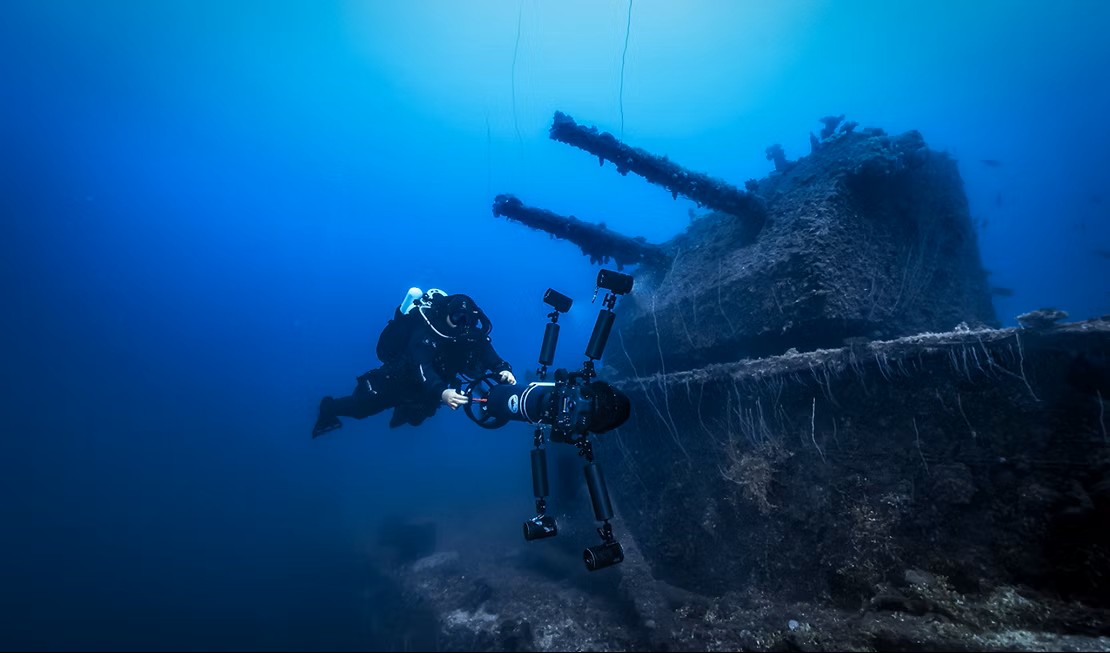
Disarming the ecological timebombs of WW2, honouring the fallen by protecting the future they fought for.
Project Guardian is an intelligence-led mission to make safe the toxic legacy of more than 8,500 WWII shipwrecks before they fail and pollute the waters around them.
Potential polluting wrecks
Tonnes of oil and hazardous fuel
Years of corrosion
More than environmental risk
Many of these wrecks are also war graves. The vessels that lie on the seabed across the Pacific, the Atlantic, the Mediterranean, and the Arctic carry not only fuel and munitions but the remains of those who served and died on them. Project Guardian works only with the consent of the relevant coastal state and, where appropriate, the flag state. The wreck structures and the remains they hold are preserved in situ; what is removed is the threat they pose to the surrounding environment.
A pre-emptive response can be respectful in ways that an emergency response cannot afford to be.
A present-day crisis
This is not a distant historical issue. A reactive “wait-and-see” approach is no longer tenable. Only a systematic, preventative strategy can address this legacy before irreversible harm occurs.
- Chronic leaks: Persistent seepage at heritage wrecks indicates unmanaged ongoing release potential.
- Sunken fleets: Clustered WWII vessel groups place reef ecosystems under cumulative stress.
An accelerating threat
The passage of time is not the only factor. Increasing environmental instability is accelerating the decay of these wrecks. More frequent and intense storms, seismic activity in vulnerable zones, and the chemical effects of ocean warming and acidification are placing immense stress on these corroding hulls. Each earthquake or major storm could trigger a catastrophic failure and a major pollution event.
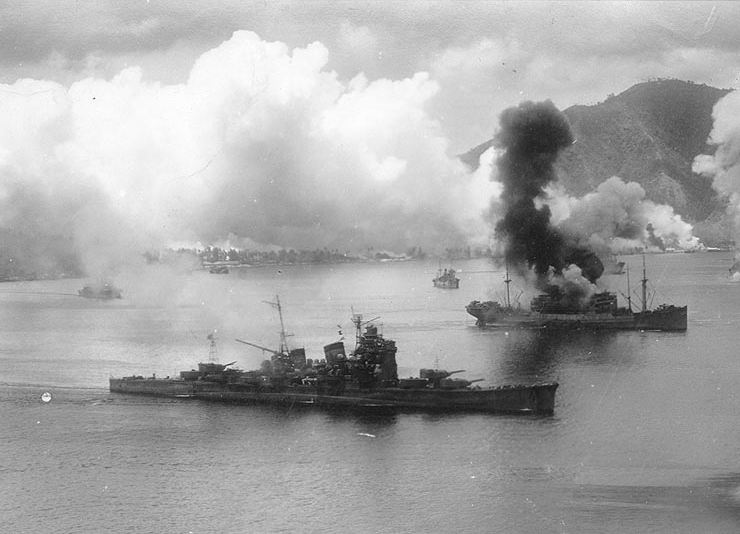
From 8,500 unknowns to a ranked, monitored inventory
No government can survey thousands of wrecks. The Guardian platform answers the question that makes action possible — which wrecks, in which order, and why — and then keeps watching them. 898 wrecks across the Pacific carry a full WERP assessment today.
The WERP methodology
Risk = ( WCS + PHS + ESI ) × RPM
Hull condition, pollutant payload and environmental sensitivity, amplified by the live stresses acting on the wreck — seismic, storm and ordnance. Phase 1 scores from historical intelligence; Phase 2 in-water survey evidence replaces inference with observation, component by component.
Guardian Sentry — continuous monitoring
Across 40 monitoring regions, Sentry watches the forces that break wrecks open: earthquakes checked hourly against ground-motion physics, cyclones tracked six-hourly across the Pacific basins, and Sentinel-1 radar oil-slick detections via SkyTruth Cerulean. Observed stress feeds back into each wreck's score; slick detections drive source attribution — they don't inflate risk numbers.
Significant developments become sealed Sentry notifications to the responsible authority — evidence a government can act on, not just pixels on a dashboard.
Operational capability
How the intelligence platform is delivered into the water.
Project Guardian's intelligence platform is delivered into the water by Deeptrek, a marine specialist operation with a forty-year lineage tracing back to its founding in 1986. Deeptrek's current capability combines deep-water environmental intervention, wreck and salvage leadership, and Unmanned Surface Vessel (USV) command-and-control technology.
Subsea operations are delivered through Deeptrek's established technology partnerships with industry-leading providers of subsea laser and photogrammetric imaging systems and professional-grade remotely operated vehicles. Where in-water remediation is required following survey, Deeptrek works with regional marine salvage and project specialists who can be brought in under appropriate consent and contractual arrangements.
Years operational lineage
Founded
End-to-end mission capability
Partners
Delivered by
Charitable partners

Secure our marine ecosystems for future generations
Work with us to turn submerged liabilities into managed, monitored risks.
A pre-emptive response can be respectful in ways that an emergency response cannot afford to be.
Three ways to engage
For coastal states and institutional partners
Engage with us
Discuss a Project Guardian deployment in your waters, a survey of your wreck portfolio, or integration with a port redevelopment or environmental remediation programme.
Engage with usFor sponsors and foundations
Support the mission
Support the mission through targeted funding, equipment sponsorship, or co-branded operational programmes.
Support the missionFor media and researchers
Contact us
Press enquiries, academic collaboration, or methodology access requests.
Contact usGeneral enquiries: project-guardian@deeptrek.net